Bianca Butler · 31 August 2026
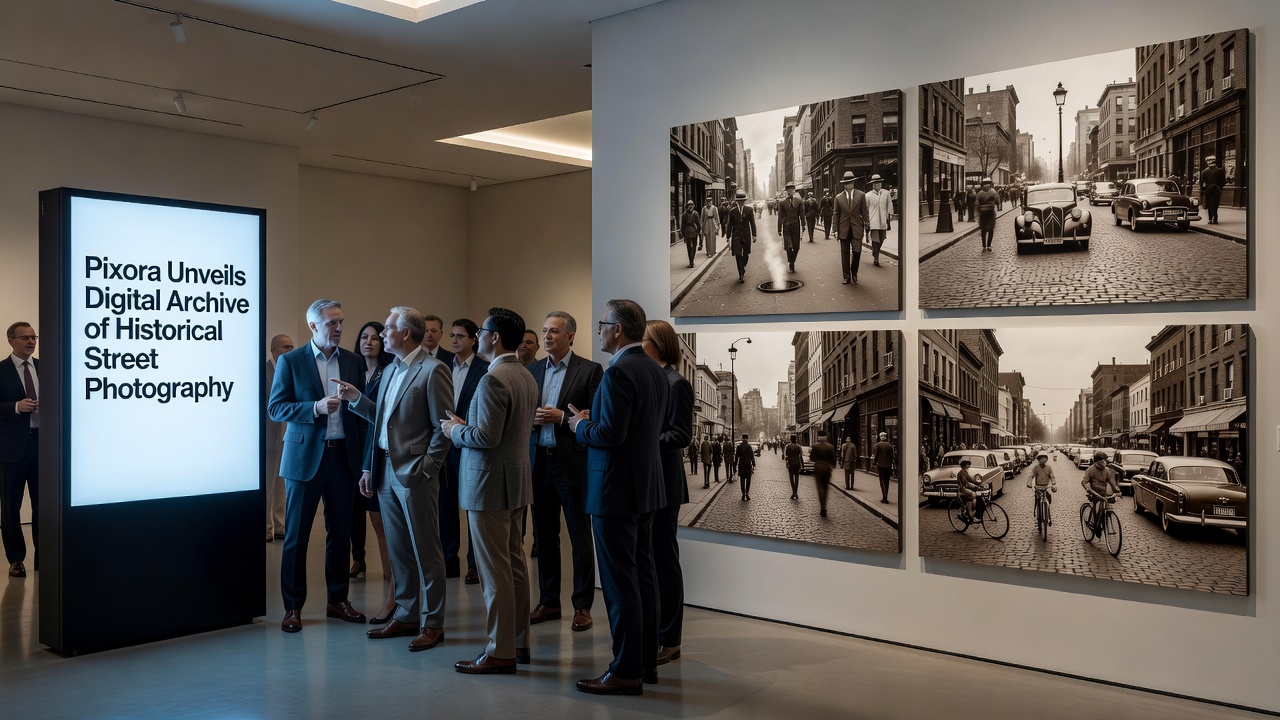
Pixora has introduced a comprehensive digital archive focused on historical street photography. The collection draws from public and private sources spanning the late 19th century to the mid-20th century, offering researchers and enthusiasts access to thousands of images that document urban life across multiple continents.
Archive Contents and Curation
The archive features works from photographers such as Berenice Abbott and Henri Cartier-Bresson alongside lesser-known practitioners. Images capture cityscapes, daily routines, and social changes in places including New York, Paris, Tokyo, and Buenos Aires. Each photograph includes metadata on date, location, and technical details where available. Pixora applied rigorous verification processes to confirm provenance and authenticity before digitization. High-resolution scans preserve original tones and textures while enabling detailed examination of architectural elements and period clothing. Users can search by geographic region, decade, or thematic categories such as transportation or public gatherings.
Access is provided through a dedicated platform with tools for side-by-side comparison and annotation. Educational institutions receive discounted subscriptions to support classroom integration. The project involved collaboration with several municipal archives and photography foundations to secure permissions and fill gaps in existing records.
Significance for Visual Research
Scholars note that centralized digital access reduces barriers previously posed by physical collections scattered across institutions. The archive supports studies of urban development patterns and cultural shifts visible in everyday scenes. Pixora plans periodic additions of newly discovered material and enhanced search features based on user feedback. Early reviews highlight the platform's stable performance and clear image presentation. This initiative aligns with broader efforts to preserve photographic heritage through modern technology while maintaining respect for original artistic intent.