
Hugo Foster · 19 September 2026
Ethical Transformations in Photography Driven by Artificial Intelligence Advances
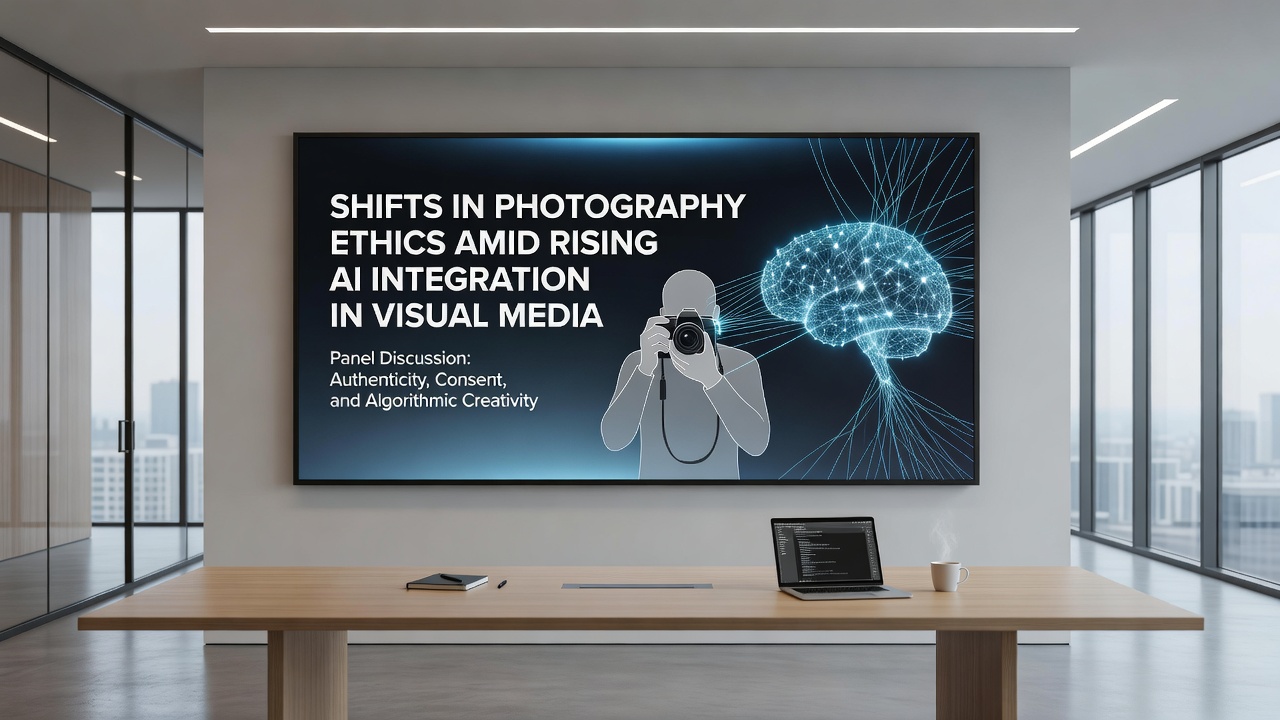
Photography ethics have undergone substantial changes as artificial intelligence tools integrate more deeply into visual media production and distribution. Organizations across the industry have responded with updated protocols that address image authenticity, consent requirements, and disclosure standards for AI-generated or AI-modified content. Data from media monitoring services shows a steady increase in AI-assisted imagery appearing in news outlets and advertising campaigns since 2023, prompting regulatory bodies and professional associations to refine their guidelines.
Core Ethical Concerns Emerging from AI Capabilities
AI systems now enable seamless alteration of visual elements, including background replacement, object removal, and facial synthesis, which raises questions about where manipulation crosses into deception. Professional photographers and editors encounter situations where AI features in software suites complete tasks that once required manual intervention, yet the final output may not reflect the original scene captured by the camera. Researchers at academic institutions have documented cases where undisclosed AI enhancements led to public disputes over the accuracy of published photographs in major publications.
Consent issues surface when AI models trained on large datasets generate likenesses of individuals without explicit permission, particularly in composite images used for editorial purposes. Industry reports indicate that several news agencies revised their contributor agreements in 2025 to include clauses specifying AI usage boundaries. These adjustments aim to protect both creators and subjects while maintaining workflow efficiency in high-volume production environments.
Regulatory Developments and Industry Responses
Government agencies have introduced frameworks that classify certain AI applications in media as high-risk activities requiring transparency measures. The European Commission's documentation on the AI Act outlines obligations for providers of generative systems to implement labeling mechanisms that identify synthetic content. Compliance deadlines phased in through 2026 have encouraged software developers to embed metadata tags and watermarking technologies directly into their tools.
In parallel, the United States National Institute of Standards and Technology released technical guidance in early 2026 that assists organizations in developing detection methods for AI-manipulated images. Media companies have begun integrating these recommendations into their verification pipelines, using forensic analysis software alongside traditional fact-checking processes. Observers note that adoption rates vary by region, with European outlets moving faster due to regulatory timelines.
Technological Tools Supporting Ethical Compliance
Content authentication platforms now offer services that verify image provenance through blockchain-based ledgers and cryptographic signatures. Photographers who upload original files to these systems can later demonstrate whether downstream modifications occurred. Several camera manufacturers announced firmware updates in September 2026 that automatically attach authenticity certificates to raw files, reducing the burden on individual creators to manage verification separately.
Training programs offered by professional associations emphasize recognition of AI artifacts and appropriate disclosure practices. Participants learn to evaluate when AI assistance remains within acceptable bounds for documentary work versus commercial applications where greater flexibility often applies. Case examples from recent disputes illustrate how proper documentation prevented escalation when questions arose about specific images.
Impact on Photojournalism Practices
Newsrooms have adjusted assignment protocols to distinguish between assignments that permit AI assistance and those that require strictly unaltered captures. Editors now request detailed technical reports from photographers when AI tools appear in post-production workflows. This shift has prompted some agencies to maintain separate categories for AI-enhanced features and straight documentary photography within their archives.
Public trust metrics tracked by media research groups reflect ongoing scrutiny of visual content, with audiences expressing greater skepticism toward images lacking clear provenance information. Organizations that adopted proactive disclosure policies report fewer complaints regarding manipulated visuals compared to those that delayed implementation of new standards.
Conclusion
Photography ethics continue to evolve alongside AI integration, with stakeholders across technology, regulation, and media sectors contributing to emerging norms. Updated guidelines, authentication technologies, and verification procedures represent coordinated efforts to preserve credibility in visual reporting. As these systems mature, professionals in the field adapt their methods to align with both technical possibilities and established principles of accuracy and transparency.